

Kampala, Uganda —
In a response to Joseph Rutabana’s April 2025 commentary on global commitments to prevent genocide, Ugandan academic and political commentator Dr. Sam Akaki has published a compelling reflection arguing that Dr. Kizza Besigye’s Reform Agenda played a decisive role in preventing a possible north–south political and ethnic confrontation in Uganda in the early 2000s.
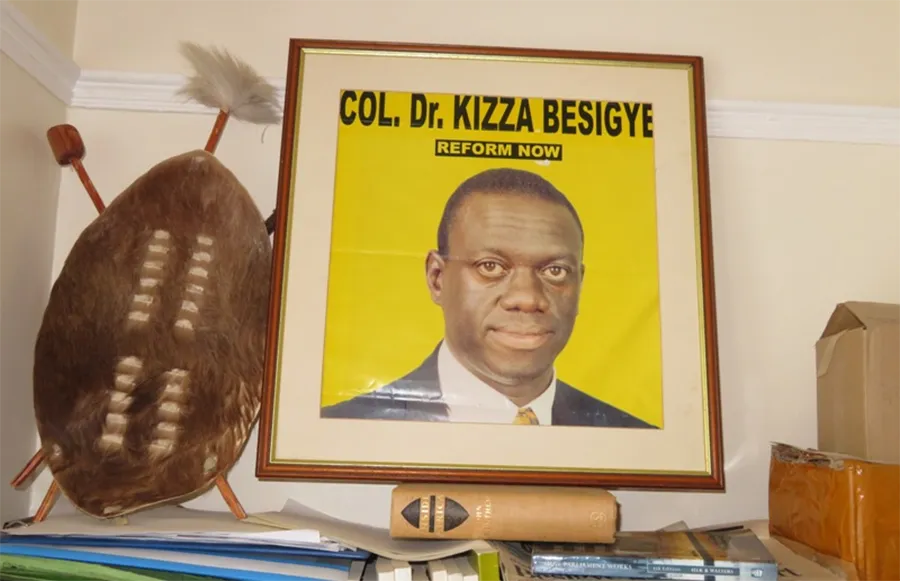
Dr. Akaki’s article revisits the turbulent political climate of the late 1990s and early 2000s, particularly the deep resentment in northern and eastern Uganda following atrocities committed during the insurgency. He argues that the Reform Agenda, launched by Dr. Besigye in 2000, provided an essential political outlet for grievances that could have otherwise spiraled into violent rebellion and ethnic conflict.
Historical Grievances and Rising Hostility
Akaki notes that, at the time, bitterness in Lango, Acholi, and Teso subregions was intense. Many communities were living in what he describes as “open-air IDP camps,” deprived of basic necessities and still reeling from massacres such as Mukura, Achol-Bur, Atiak, Corner Kilak, and Bar-Lonyo.
He argues that many northerners viewed the National Resistance Army (NRA) as responsible for large-scale suffering, fueling a growing desire among youth and displaced families to join rebel groups in an attempt to overthrow President Museveni’s government.
Several prominent figures from northern Uganda—both civilians and former government officials living in exile—were reportedly mobilizing diplomatic and material support for renewed resistance.
The Turning Point: Besigye’s Reform Agenda
Against this volatile background, Dr. Kizza Besigye’s decision to challenge President Museveni in 2001 emerged as a political lifeline, Akaki writes.
He argues that Besigye’s Reform Agenda:
- Offered citizens in the north and east a peaceful, democratic channel to express their frustration
- United people who might otherwise have turned to rebellion
- Reduced the likelihood of revenge-driven conflict between northern and southern communities
- Signaled to the government that opposition was rooted in legitimate political demands, not ethnic rivalry
Akaki recounts that many joined the Reform Agenda not only out of ideology but with hopes of political change. He also reveals that his support for Besigye cost him his place in his clan, as some northern leaders viewed Besigye—formerly a high-ranking NRA member—as part of the structure that dismantled the UNLA before Museveni’s rise to power.
Diplomatic Engagement From Exile
Writing from his perspective as a Ugandan then living in London, Akaki shares how he:
- Used contacts in Uganda to help convince his own brother to abandon rebellion and return home
- Engaged British Members of Parliament and Foreign Office officials to present Besigye as a peaceful avenue for resolving Uganda’s political crisis
- Was later appointed External Coordinator of the Reform Agenda
He insists that the movement’s goal was not violent regime change but reforming the Movement system through gradual, peaceful evolution.
Electoral Impact and National Stability
According to Akaki, the Reform Agenda and its successor, the Forum for Democratic Change (FDC), gave northern, northwestern, and eastern communities a powerful but non-violent mechanism for “punishing” the government. The overwhelming votes for Besigye in the 2001 and 2006 elections, he argues, proved the depth of political dissatisfaction and eventually prompted the government to pursue peace initiatives.
He concludes that this electoral expression prevented Uganda from descending into an all-out revenge conflict that could have mirrored or even exceeded the 1994 Genocide against the Tutsi in Rwanda.
A Warning for the Present
Akaki cautions that contemporary Uganda remains vulnerable to internal conflict due to intense competition for land, political power, and economic opportunity. He warns that any rebellion today would not pit Ugandans against the state alone, but against each other—potentially unleashing widespread violence.
He urges politicians to avoid fueling conflict and instead embrace peaceful reform, echoing the mantra: “Never Again to Rebellion.”